Local
Korea-First Expertise
Deep local knowledge and on-the-ground networks to navigate Korea's unique digital ecosystem. We operate from Seoul because this market requires presence, not remote guessing.
Learn more about Korea-First Expertise
Inquivix is the Korea-focused digital marketing agency that helps global brands enter, localize, and scale in South Korea. We combine platform-native strategy on Naver, Kakao, and Korean social media with data-driven performance marketing, so you grow with precision, not guesswork.
Seoul, Korea: Where Global Brands Grow






Four reasons global brands choose Inquivix as their Korea market partner.
Deep local knowledge and on-the-ground networks to navigate Korea's unique digital ecosystem. We operate from Seoul because this market requires presence, not remote guessing.
Learn more about Korea-First ExpertiseNaver, Kakao, Meta, Google, YouTube. We build strategies around how Korean consumers actually search, discover, and buy. Not how Western playbooks assume they do.
Learn more about Platform-Native StrategyAdvanced analytics and testing frameworks that drive efficient acquisition and measurable growth. Every campaign has KPIs, every KPI has a dashboard, every dashboard has a decision attached.
Learn more about Data-Led ExecutionKorean-native strategists, copywriters, and campaign managers who operate in-platform, in-language, in-market. Your campaigns aren't translated. They're built Korean-first by people who live and work here.
Learn more about Bilingual Team, Native ExecutionFrom market entry research to performance marketing and localized content, we deliver integrated solutions built for the Korean market, not adapted from a global template.
Our process is built to reduce risk, accelerate market entry, and deliver sustainable growth in the Korean market. Whether you are entering Korea for the first time or optimizing an existing presence, we follow the same disciplined framework, because repeatable process is what separates strategy from luck.

We decode the market, validate opportunities, and design the right strategy. Every engagement starts with research, not assumptions. We analyze your competitive landscape in Korea, identify the platforms and channels where your target audience actually spends time, and build a strategy grounded in Korean market data. This phase produces a documented go-to-market plan with defined KPIs, channel allocation, and a realistic timeline.

We execute platform-native campaigns and localize every touchpoint to go live fast. Once strategy is locked, we move to execution across every channel in the plan. Korean website and content localization, Naver and Kakao campaign setup, influencer outreach, paid media activation, and analytics configuration. Every asset is produced in Korean by native speakers, every campaign is set up in-platform by our own operators, and every tracking system is verified before spend begins.

We optimize relentlessly, scale what works, and deliver predictable growth. Growth in Korea compounds when you have the data infrastructure to see what is working and the operational capability to double down. We run continuous testing, refine targeting based on Korean search and social trends, expand into new channels as performance data justifies it, and report results in formats built for your stakeholders, not ours.
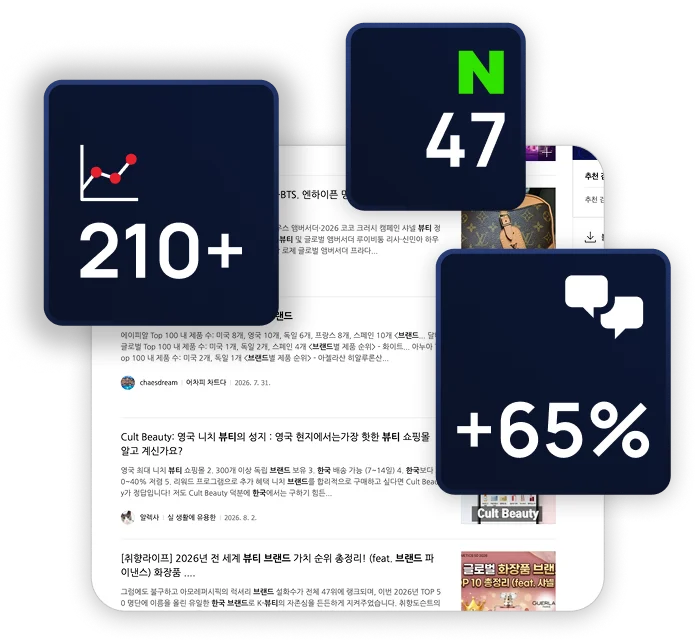
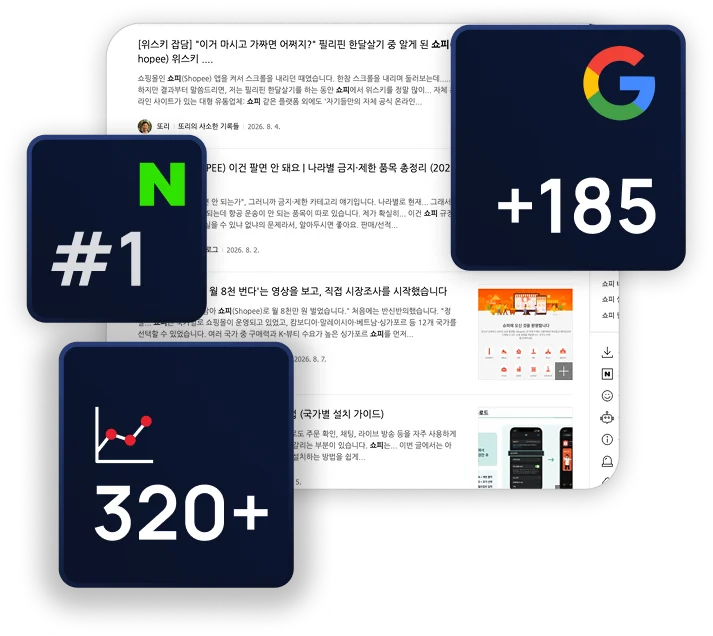
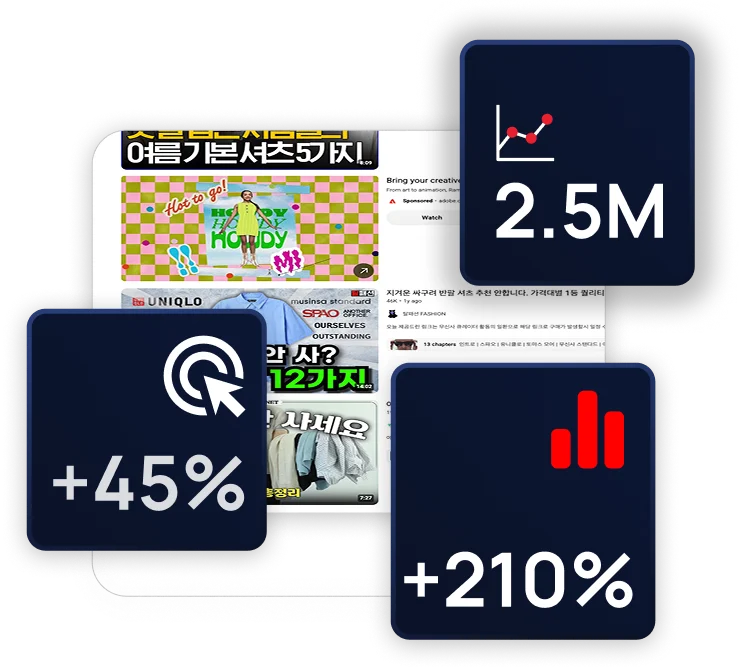
We measure our work in revenue, not impressions. Here is what that looks like for the global brands we partner with in Korea.
Market intelligence and practical strategies for Korea. Stay ahead of platform changes, algorithm updates, and shifts in Korean consumer behavior.
Korea's digital landscape runs on platforms most global teams have never used. Naver, not Google, is the dominant search engine, with over 60% market share for Korean-language queries. KakaoTalk is the universal messaging platform with over 90% population penetration and its own advertising ecosystem. Korean consumers discover brands through Naver Blog reviews, KakaoTalk Channels, and Korean-language social content, not through the Western platforms and tactics most agencies default to. Effective marketing in Korea requires platform-native strategy, Korean-language content, and a team that operates in-market.
It depends on what you are trying to accomplish, but for most international brands, the answer is yes. Korean advertising platforms like Naver Ads and Kakao Moment require Korean-language campaign management and, in many cases, Korean business entity registration to operate. Content that resonates with Korean consumers requires native-level Korean copywriting, not translated English. And the regulatory environment around data privacy (PIPA), advertising disclosures, and e-commerce operations adds complexity that remote teams typically cannot navigate efficiently. A Seoul-based agency with bilingual capabilities eliminates these friction points.
Timelines vary by channel and objective. Paid media campaigns on Naver and Kakao can generate qualified traffic within the first two weeks of launch. Naver Blog SEO and organic search visibility typically require three to six months of consistent content publishing and optimization before meaningful ranking improvements materialize. Influencer campaigns produce measurable engagement within the campaign period, usually four to eight weeks. A comprehensive market entry program that combines paid, organic, and influencer channels generally reaches a meaningful performance baseline within the first 90 days.
Naver SEO is the practice of optimizing content and web properties for visibility on Naver, South Korea's largest search engine. Unlike Google, Naver operates a modular search results page that displays results from its own ecosystem first: Naver Blog, Naver Cafe, Naver Knowledge iN, Naver SmartStore, and Naver News. Traditional website SEO has limited impact on Naver compared to Google. Ranking on Naver requires publishing optimized content directly on Naver's owned platforms, understanding Naver's proprietary ranking factors like C-Rank and DIA scores, and maintaining consistent publishing velocity. It is a fundamentally different discipline from Google SEO, and the two require separate strategies.
Korea's digital landscape runs on platforms most global teams have never used. Naver, not Google, is the dominant search engine, with over 60% market share for Korean-language queries. KakaoTalk is the universal messaging platform with over 90% population penetration and its own advertising ecosystem. Korean consumers discover brands through Naver Blog reviews, KakaoTalk Channels, and Korean-language social content, not through the Western platforms and tactics most agencies default to. Effective marketing in Korea requires platform-native strategy, Korean-language content, and a team that operates in-market.
It depends on what you are trying to accomplish, but for most international brands, the answer is yes. Korean advertising platforms like Naver Ads and Kakao Moment require Korean-language campaign management and, in many cases, Korean business entity registration to operate. Content that resonates with Korean consumers requires native-level Korean copywriting, not translated English. And the regulatory environment around data privacy (PIPA), advertising disclosures, and e-commerce operations adds complexity that remote teams typically cannot navigate efficiently. A Seoul-based agency with bilingual capabilities eliminates these friction points.
Timelines vary by channel and objective. Paid media campaigns on Naver and Kakao can generate qualified traffic within the first two weeks of launch. Naver Blog SEO and organic search visibility typically require three to six months of consistent content publishing and optimization before meaningful ranking improvements materialize. Influencer campaigns produce measurable engagement within the campaign period, usually four to eight weeks. A comprehensive market entry program that combines paid, organic, and influencer channels generally reaches a meaningful performance baseline within the first 90 days.
Naver SEO is the practice of optimizing content and web properties for visibility on Naver, South Korea's largest search engine. Unlike Google, Naver operates a modular search results page that displays results from its own ecosystem first: Naver Blog, Naver Cafe, Naver Knowledge iN, Naver SmartStore, and Naver News. Traditional website SEO has limited impact on Naver compared to Google. Ranking on Naver requires publishing optimized content directly on Naver's owned platforms, understanding Naver's proprietary ranking factors like C-Rank and DIA scores, and maintaining consistent publishing velocity. It is a fundamentally different discipline from Google SEO, and the two require separate strategies.
Let's build together
Let's build a winning strategy tailored to your market, audience, and goals. Get in touch with our experts today. No pitch deck. No pressure. Just a focused conversation about your Korea opportunity.